Library Required reading Where it started
What a Click Actually Measures
In 1874 Wilhelm Wundt set out to make psychology an experimental science. Every time you test a headline or a landing page, you're using his idea that a human response can be measured.
Wilhelm Wundt · Principles of Physiological Psychology · 1873–74
What it is
This is the book that marked out experimental psychology as a field of its own. It was first published in German as Grundzüge der physiologischen Psychologie, and Wundt says what he’s doing in the first sentence of his preface:
“The work which I here present to the public is an attempt to mark out a new domain of science.” Author’s preface to the first edition (E. B. Titchener’s translation, 1904)
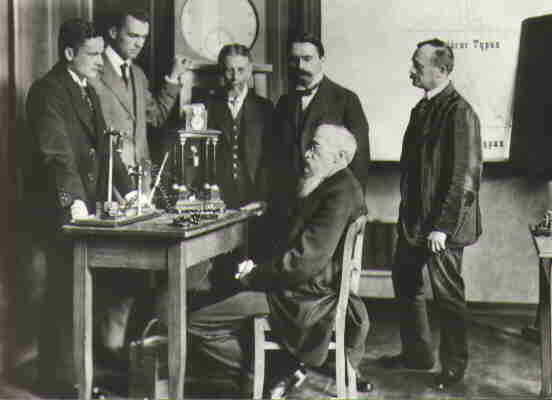
A few years later he opened a laboratory at the University of Leipzig dedicated to psychological experiments, and students came from across Europe and America to train in it. One of them, Walter Dill Scott, earned his PhD under Wundt in 1900 and went on to write The Theory of Advertising (1903) and The Psychology of Advertising (1908). So advertising was one of the first places the new psychology got put to work.
What you’ll take from it
You’ll get the starting assumption behind every test you run. Before Wundt, the mind was mostly a subject for philosophy. After him, a response to a stimulus was something you could set up, time and count under controlled conditions, and then compare.
Advertising picked up that assumption early, and performance marketing runs on it. Think about what fills your reports. A click, a reply, a form fill. Each one is a measured response to a stimulus you control.
Where it shows up in your numbers
Being able to measure a response is what makes testing possible. The problem starts when you forget what was actually measured. Wundt’s subjects reacted to lights and sounds in a lab, and nobody mistook the reaction time for the person. A click is the same kind of thing. It’s a response to an ad, and it doesn’t measure what the customer will be worth.
Most of the problems the articles on this site cover start right there, when the response that’s easy to measure quietly stands in for the value that isn’t.
Next on the shelf John E. Kennedy, Reason-Why Advertising